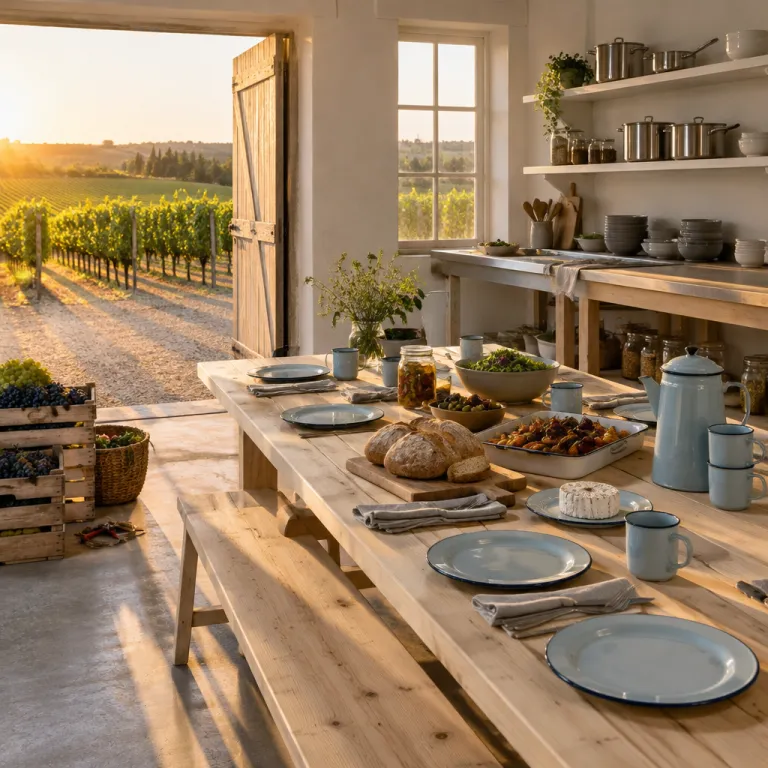
The quiet heart of vineyard harvest meal wine country food culture
Walk into any working vineyard at dawn in harvest season and you will smell coffee before you smell crushed grapes. A vineyard harvest meal in real wine country food culture begins long before the first picking crate is filled, because the crew’s breakfast quietly sets the rhythm for the entire day. In the most characterful vineyards the vineyard kitchen sits between rows and cellar, turning simple food into the first shared experience of the harvest.
In Burgundy, the repas des vendangeurs is written into the harvest contract, and the domaine commits to feeding every picker properly throughout the season. That obligation shapes a very specific vineyard harvest meal wine country food culture, where pot au feu, charcuterie and strong coffee appear as reliably as the morning fog over the valley. When you read those menus pinned to a cellar door, you are reading a living archive of regional food, not a curated list for tourists.
Across wine country regions such as Sonoma County, Napa Valley and Paso Robles, the same principle holds even when the dishes change. A farm table set beside the crush pad might carry huevos rancheros in Sonoma Valley, breakfast burritos in Napa, or pan con tomate in a Spanish influenced hill farm above a California valley. Wherever you travel, the first meal of the day reveals how wineries still operate as farms, and how each vineyard and county wine tradition keeps its own pace.
Field lunches in Burgundy, Rioja and the Douro: contracts, terraces and vine smoke
By midday, the vineyard harvest meal wine country food culture becomes more visible, because lunch is when the entire harvest crew finally slows down. In Burgundy, the repas des vendangeurs often means a sit down table dinner in the farmhouse kitchen, with steaming pot au feu, Époisses cheese and plenty of red wine from the estate’s own vineyard. The winemaker might pour older wines from the cellar, turning a practical break into one of the most quietly luxurious winemaker dinners you will ever attend.
In Rioja, lunch often moves outdoors, where lamb chops are grilled over dried vine cuttings beside the vineyards. That smoke carries the same country aromas you later search for in the wines during a tasting, linking food, wine and landscape in a single experience. When you taste those lamb fat and herb notes in a glass, you are tasting the same vines that warmed the crew’s food, a direct line between wine food pairing and agricultural reality.
Further south in the Douro Valley, long farm tables are set up between schist terraces, shaded by olive trees that also supply the oil for the meal. Cozido, bacalhau and simple salads appear in generous platters, designed to refuel people who have been carrying grapes up and down steep slopes all morning. If you are planning an elegant but grounded table at home, the same logic of hearty, regionally anchored dishes works beautifully with everything from pizza pairings to grilled meats, as explored in this guide to what wine goes with pizza for an elegant travel inspired table.
Why harvest meals taste different in Napa, Sonoma and Paso Robles
On the American West Coast, the vineyard harvest meal wine country food culture has its own grammar, shaped by migration, climate and a more open approach to guests. In Napa Valley, a typical harvest experience might start with a grape stomp for visitors, but the real story unfolds later at the staff farm table behind the winery. There, you might find chilaquiles, grilled seasonal vegetables and big pots of beans, all cooked by the same people who sorted grapes at dawn.
Sonoma County leans even more heavily into its farm identity, with many wineries sourcing food directly from their own gardens or nearby hill farm properties. A Sonoma Valley table dinner during harvest season could feature roasted squash, local cheeses, and sausages from a neighboring farm, served alongside county wine that rarely leaves the region. Some estates add live music in the courtyard, but the most telling moments happen when the band stops and the crew keeps talking about soils, vines and the next day’s picking plan.
Paso Robles, further down the coast, offers a different but equally compelling harvest experience, where Rhône style wines meet Central Coast ranch culture. Here, harvest events might include winemaker dinners under the stars, with tri tip grilled over oak, salsa made from backyard tomatoes and generous pours of award winning Syrah. For travelers building special occasion menus, these meals offer a template that goes far beyond restaurant tasting menus, and you can deepen that planning with this guide to curating special occasion menus for memorable wine and food pairings.
The vineyard kitchen as cultural archive, from Alsace to Tuscany
Move north to Alsace or south to Tuscany and the vineyard harvest meal wine country food culture shifts again, but the logic remains constant. In Alsace, a vineyard kitchen might send out tarte flambée and choucroute for lunch, dishes built on pork, potatoes and cabbage that sustain pickers through cold mornings among steep vineyards. Those same ingredients later appear in more polished form at village restaurants, but the field version is where you feel their original purpose.
In Tuscany, harvest season lunches often revolve around ribollita, grilled bread and new olive oil, served at a long farm table under cypress trees. The vineyard crew eats quickly but attentively, dipping bread into oil pressed from the estate’s own groves, while carafes of simple red wine circulate alongside water. When you read travel writing that focuses only on Michelin stars, you miss this quieter layer of food wine culture, where the kitchen is calibrated to physical work rather than spectacle.
Across these regions, the vineyard kitchen functions as a cultural archive, preserving recipes that have changed little because they work so well for people who spend all day with grapes. A visitor invited to share that table dinner gains a more honest understanding of wine country than any polished tasting room can offer. If you want to build similarly grounded meals into your own itineraries, pair these harvest experiences with seafood focused itineraries such as the refined seafood pairings outlined in this guide to refined seafood pairings for the discerning traveler.
How travelers can respectfully join harvest experiences and field tables
For independent travelers, the most meaningful way to engage with vineyard harvest meal wine country food culture is to sit, when invited, at the same table as the crew. A small but growing number of wineries in Napa, Sonoma County and beyond now offer structured harvest experiences that include a shared meal, sometimes after a morning of picking or sorting grapes. These are not staged grape stomp photo opportunities, but working days that end with a simple dinner cooked for everyone on site.
When you book such a harvest experience, treat it as time on a farm rather than a performance, and dress, behave and ask questions accordingly. Respect the fact that the vineyard, the winery and the surrounding farms are workplaces first, and that the meal exists to feed people who will be back in the rows before sunrise tomorrow. If you are offered county wine from unlabeled bottles or a rustic wine food pairing that never appears on any menu, understand that you are being shown something more intimate than any award winning tasting flight.
Across wine country, the most memorable harvest events often happen far from the public calendar, at hill farm properties or small family vineyards where live music is replaced by the sound of hoses and forklifts. Travelers who are invited into those spaces usually have built trust over several seasons, returning to the same valley, the same farm table, the same winery courtyard. For them, the annual wine harvest becomes less a spectacle and more a reunion, where food, wines and people come together in a rhythm that feels as natural as the changing season.
FAQ
How can I attend a harvest meal at a working winery ?
The most reliable way to attend a harvest meal at a working winery is to book a structured harvest experience directly with the estate. Many wineries in regions such as Napa Valley, Sonoma County and Paso Robles offer limited harvest season programs that include time in the vineyard, a cellar tour and a shared meal with the team. Always confirm in advance whether the meal is with the crew or a separate guest table dinner, and be prepared for an early start and physically active morning.
Are harvest meals suitable for travelers with dietary restrictions ?
Harvest meals are usually designed to feed vineyard workers efficiently, so menus can be fixed and quite traditional. However, many wineries can accommodate common dietary restrictions if you communicate clearly when booking a harvest experience, especially in regions with strong hospitality infrastructure such as Napa Valley and Sonoma. If your needs are complex, consider arranging a private farm table lunch or winemaker dinner, where the kitchen has more flexibility to adapt food wine pairings.
What should I wear and bring to a vineyard harvest day ?
For a vineyard harvest day, dress as you would for light farm work, with sturdy closed shoes, layers, a hat and clothing you do not mind staining. Mornings in the valley can be cool, while afternoons among the vineyards become warm, so breathable fabrics and sun protection matter. Bring a reusable water bottle, sunscreen and a small notebook if you like to read back through your tasting notes and harvest impressions later.
Do harvest meals usually include formal wine tastings ?
Most harvest meals include wine, but not always in the form of a structured tasting with multiple wines and detailed notes. You are more likely to drink one or two estate wines that pair well with the food, poured casually at the farm table or in the cellar. If you want a full tasting flight in addition to the meal, schedule a separate tasting appointment at the winery before or after the harvest activities.
Which regions are best for combining harvest events with travel ?
Regions such as Napa Valley, Sonoma County, Sonoma Valley, Paso Robles, Burgundy, Rioja, the Douro Valley, Alsace and Tuscany are particularly rewarding for combining harvest events with broader travel. Each offers a dense cluster of wineries, varied vineyards and strong local food cultures, making it easy to plan several different harvest experiences within a single trip. When choosing where to go, think about whether you prefer cooler valley climates, coastal influences or hill farm landscapes, because each shapes both the wines and the meals served to the harvest crew.