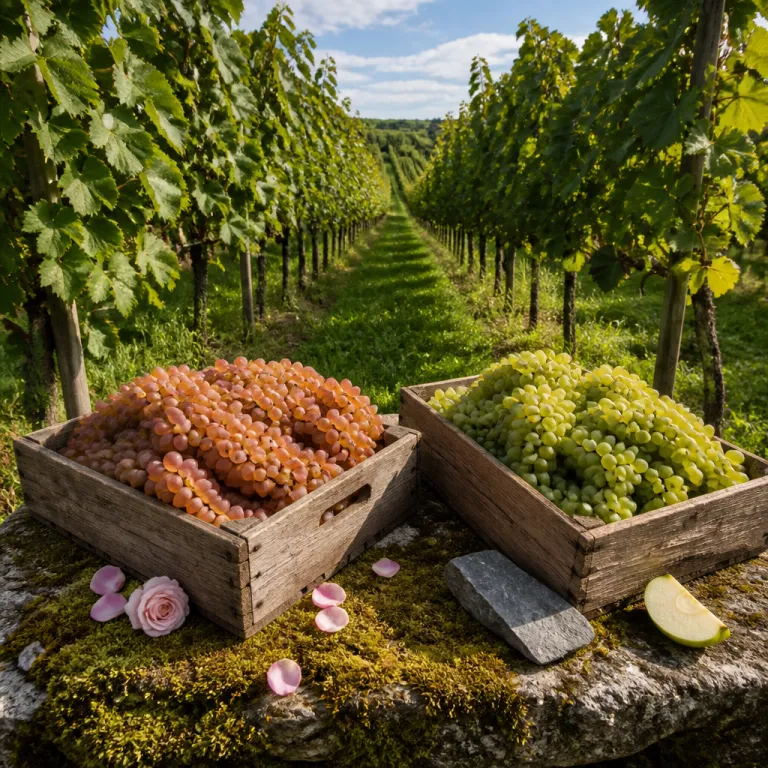
Gewürztraminer vs Riesling on the road: planning a white wine journey
Choosing between Gewürztraminer vs Riesling is not only a tasting question, it is a travel decision that shapes your entire vineyard itinerary. When you understand how each grape variety expresses sweetness, dryness, fruit character, and acidity, you can align specific wine regions with the kind of trip you want to experience. Thinking in terms of contrasting white wines, from intensely aromatic styles to razor sharp dry styles, helps you design routes that feel coherent and deeply satisfying.
Gewürztraminer as a grape is famously exotic, with rose, lychee, and tropical fruit notes that feel almost perfumed. Riesling as a grape variety is defined by high acidity, citrus, and stone fruit, which gives the wines a precise, vertical structure that many travelers find refreshing after long days on the road. When you compare Gewürztraminer wine with Riesling wines in situ, the gewürztraminer vs riesling debate becomes a sensory map that guides you from one valley to the next.
In Alsace, where both grape varieties thrive, you can taste dry styles, off dry wines, and lusciously sweet late harvest selections in a single day. The AOC Alsace framework and the Alsace Grand Cru system give structure to your visits, especially when you focus on grand cru vineyards that produce both Riesling and Gewürztraminer wine. For travelers, this means you can explore different styles, compare Gewürztraminer Riesling flights, and understand how terroir, slope, and soil influence aging potential and food pairings.
Alsace and its grand crus: where gewürztraminer and riesling share the same hillsides
Alsace is the most natural starting point for any gewürztraminer vs riesling focused journey, because both grapes reach benchmark quality there. The region’s patchwork of villages, medieval streets, and steep vineyards allows you to walk from one cellar to another while comparing aromatic white wines grown only a few hundred metres apart. For a traveler, this proximity turns the question of Riesling Gewürztraminer preferences into a day long exploration rather than a theoretical exercise.
Along the Route des Vins, many estates pour both dry Riesling and richer Gewürztraminer wine from the same grand cru slopes, which makes the contrast especially clear. AOC Alsace labels indicate the basic origin, while Alsace Grand Cru names such as Rangen, Brand, or Schlossberg signal more focused terroirs with higher aging potential and often higher acidity in Riesling. When you taste late harvest Sélection de Grains Nobles wines, you see how both grape varieties can become intensely sweet while still reflecting their original aromatic profile.
Local sommeliers often suggest anchoring your tastings with benchmark producers such as Trimbach in Ribeauvillé, Zind-Humbrecht in Turckheim, or Domaine Weinbach near Kaysersberg if you want to understand the full spectrum of these grapes. In many cellars, you can compare dry styles of Riesling with off dry or sweet Gewürztraminer, then reverse the roles with a dry Gewürztraminer and a late harvest Riesling. Travelers who enjoy moscato style sweetness often gravitate toward Sélection de Grains Nobles Gewürztraminer, while those who prefer tension and citrus driven fruit usually favour Riesling from cooler sectors of the valley.
For readers interested in another aromatic white wine journey, an Italian escape focused on lightly sparkling sweetness pairs beautifully with a gewürztraminer vs riesling themed Alsace trip ; see this guide to a moscato vineyard escape in Italy. Combining these regions allows you to compare how different grape varieties express sweetness, acidity, and perfume across contrasting landscapes. The result is a broader understanding of white wine styles that makes every future glass more meaningful.
Cool climate contrasts: Mosel, Alto Adige, Clare Valley and beyond
Once you have explored Alsace, the gewürztraminer vs riesling journey naturally extends to other cool climate regions that specialise in one grape or the other. The Mosel in Germany, Alto Adige in northern Italy, and the Clare Valley and Eden Valley in Australia each offer distinct expressions of these white wines. By visiting several of these regions, you can compare how altitude, latitude, and valley orientation influence dryness, sweetness, and aromatic intensity.
In Alto Adige, Gewürztraminer often shows very intense aromatic fruit, with rose petal, lychee, and spice, while Riesling remains relatively rare but increasingly respected for its high acidity and aging potential. In the Clare Valley and neighbouring Eden Valley, Riesling dominates, producing dry styles with piercing citrus, lime, and green apple, while Gewürztraminer plays a smaller but intriguing role in blends and limited bottlings. Some producers in Australia Clare experiment with Riesling Gewürztraminer cuvées, giving travelers a chance to taste gewürztraminer riesling combinations that highlight both perfume and structure.
For travelers who enjoy structured, food friendly white wines, these regions provide a counterpoint to the richer Alsace grand cru bottlings. The contrast between Mosel’s slate driven Riesling from estates such as Dr. Loosen or Joh. Jos. Prüm, Alto Adige’s mountain grown Gewürztraminer wine, and Clare Valley’s sunlit but cool Riesling from producers like Grosset shows how one grape variety can adapt to many climates while retaining high acidity. If you are planning a broader white wine itinerary that includes Italy, this traveler’s guide to the white wines of Italy is a useful complement to your gewürztraminer vs riesling research.
New World routes: Finger Lakes and the United States perspective
The gewürztraminer vs riesling story changes again when you cross the Atlantic and explore the United States, especially the Finger Lakes region of New York. Here, cool climate conditions and deep glacial lakes create an ideal environment for high acidity white wines, with Riesling as the flagship grape variety. Gewürztraminer plays a smaller but significant role, offering aromatic contrast and adding diversity to tasting room lineups.
In the Finger Lakes, many wineries produce several Riesling styles, from bone dry to medium sweet, allowing visitors to understand how residual sugar interacts with acidity. Gewürztraminer wine from this region tends to be slightly less opulent than in Alsace, but still shows expressive fruit, spice, and floral notes that appeal to travelers who enjoy aromatic wines. Side by side flights of gewürztraminer vs riesling often include dry styles, off dry versions, and late harvest bottlings, which makes the comparison very clear even for less experienced tasters.
Benchmark estates such as Dr. Konstantin Frank on Keuka Lake or Hermann J. Wiemer on Seneca Lake illustrate the range of Riesling expressions, from steely dry bottlings to gently sweet cuvées. Beyond the Finger Lakes, pockets of Riesling and Gewürztraminer appear in the Pacific Northwest and cooler parts of California, though plantings remain modest compared with other grape varieties. For travelers, this means you can weave gewürztraminer riesling stops into broader wine road trips focused on Pinot Noir, Chardonnay, or Cabernet Sauvignon. If you are planning such a mixed itinerary, this guide to good Pinot Noir under 30 for vineyard travelers pairs well with a Riesling focused route through the United States.
From dry to sweet: understanding styles, grains nobles and food pairings
One of the most important aspects of gewürztraminer vs riesling for travelers is understanding the full spectrum of styles, from very dry to intensely sweet. Riesling is famously versatile, producing dry styles with razor sharp acidity as well as late harvest and botrytised wines that can rival moscato in perceived sweetness. Gewürztraminer, by contrast, often feels rich even when technically dry, because its aromatic fruit and lower acidity create a rounder texture on the palate.
In Alsace, labels such as Vendange Tardive and Sélection de Grains Nobles indicate progressively sweeter wines, often made from Riesling or Gewürztraminer grapes affected by noble rot. These Sélection de Grains Nobles wines can be extraordinarily concentrated, with honeyed fruit, spice, and remarkable aging potential that rewards patient cellaring. Travelers interested in dessert wines should plan visits to estates that specialise in these styles, asking specifically to compare Riesling Sélection de Grains Nobles with Gewürztraminer Sélection de Grains Nobles from the same grand cru vineyards.
Food pairings change dramatically along this sweetness spectrum, and tasting on site with local dishes is the best way to understand the options. As local experts often explain, “What foods pair well with Gewürztraminer? Spicy dishes, Asian cuisine, and strong cheeses.” and “Is Riesling always sweet? No, Riesling ranges from dry to sweet styles.” which is exactly what you will experience in regional restaurants. Classic matches include foie gras with sweet Gewürztraminer, sushi or Thai dishes with off dry Riesling, and alpine cheeses with dry, high acidity Riesling from cooler regions.
Designing your itinerary: practical tips for comparing gewürztraminer and riesling on site
To make the most of a gewürztraminer vs riesling themed trip, structure your days around focused comparative tastings rather than scattered visits. Aim to visit at least two or three estates per day that pour both grape varieties, so you can compare dry wines, off dry styles, and sweet selections under similar conditions. This approach helps you understand how factors such as valley orientation, soil type, and elevation influence acidity, fruit character, and aromatic intensity.
When booking appointments, ask specifically whether the estate offers vertical tastings of Riesling or Gewürztraminer, which show aging potential over several vintages. Older bottles of Riesling from regions like the Mosel, Clare Valley, or Eden Valley often develop petrol, honey, and complex citrus notes while retaining high acidity, whereas mature Gewürztraminer wines tend to emphasise spice, dried fruit, and a broader texture. Comparing these aging curves in the cellar gives you a deeper sense of each grape variety’s strengths and ideal drinking windows.
During tastings, take simple notes on sweetness level, perceived dryness, acidity, and food pairings suggested by the host. Pay attention to whether a wine is labelled as grand cru, Vendange Tardive, or Sélection de Grains Nobles, and ask how that status affects harvest timing and selection of grains in the vineyard. Over several days, patterns will emerge, and your personal preference in the gewürztraminer vs riesling debate will become clearer, whether you lean toward piercing, dry styles of Riesling or lush, aromatic Gewürztraminer wine with a touch of sweetness.
Key figures and technical insights for gewürztraminer and riesling travelers
- Average acidity levels differ measurably between the two grapes ; Gewürztraminer typically shows a slightly higher pH and softer acidity than Riesling, which often explains why Riesling tastes fresher and more linear during tastings even at similar sweetness levels.
- Growing interest in aromatic white wines has led to increased plantings of Gewürztraminer and Riesling in cool climate regions such as the Finger Lakes, Alto Adige, and the higher parts of the Clare Valley, giving travelers more destinations focused on these grape varieties.
- Producers in classic regions like Alsace now vinify a wider range of dry styles for both Gewürztraminer and Riesling, responding to global demand for food friendly wines that pair well with lighter dishes and modern cuisine.
- Late harvest and Sélection de Grains Nobles bottlings represent a small fraction of total production in regions such as Alsace, yet they attract a disproportionate share of critical attention, which makes them key targets for serious wine travelers.
FAQ about gewürztraminer vs riesling for vineyard travel
Is Gewürztraminer usually sweeter than Riesling when tasting at wineries ?
Gewürztraminer often feels sweeter because it has lower acidity and very intense aromatic fruit, even when technically dry. Riesling, with its naturally high acidity, can balance residual sugar more effectively, so a medium sweet Riesling may taste fresher than a similarly sweet Gewürztraminer. During visits, always ask staff about actual sugar levels and taste both grapes side by side to calibrate your palate.
Which regions are best if I want mostly dry styles of Riesling and Gewürztraminer ?
For predominantly dry Riesling, focus on the Clare Valley and Eden Valley in Australia, the Mosel and other German regions, and the Finger Lakes in the United States. In Alsace, many estates now produce clearly labelled dry styles of both Riesling and Gewürztraminer, especially at the grand cru level. When booking, ask specifically for dry tasting flights if you prefer minimal sweetness.
What foods should I plan around a gewürztraminer vs riesling themed trip ?
Plan to try spicy Asian dishes, strong cheeses, and foie gras with Gewürztraminer, especially in Alsace where these pairings are traditional. For Riesling, look for regional dishes featuring pork, river fish, or lightly spiced cuisine, which benefit from the grape’s high acidity and citrus driven profile. Many wineries and local restaurants offer set menus designed around these food pairings, which is ideal for travelers.
Does either grape variety age better, and how can I taste that while traveling ?
Riesling generally has greater aging potential because of its combination of high acidity and moderate alcohol, particularly in cooler regions like the Mosel, Clare Valley, and Eden Valley. Gewürztraminer can also age well, especially from top Alsace grand cru sites, but it tends to evolve toward richer, spicier profiles rather than the taut complexity seen in mature Riesling. Ask wineries whether they offer older library releases of both grapes so you can compare aging curves directly in the cellar.
Is it possible to taste blends or comparative flights of Riesling and Gewürztraminer in one place ?
Yes, many estates in Alsace, Alto Adige, and the Finger Lakes pour both varieties, and some in Australia Clare even produce Riesling Gewürztraminer blends. Look for tasting rooms that offer structured flights labelled by grape variety, sweetness level, and vineyard origin, which makes the gewürztraminer vs riesling comparison much clearer. Planning your route around such estates is one of the most efficient ways to deepen your understanding of these two iconic white wines.