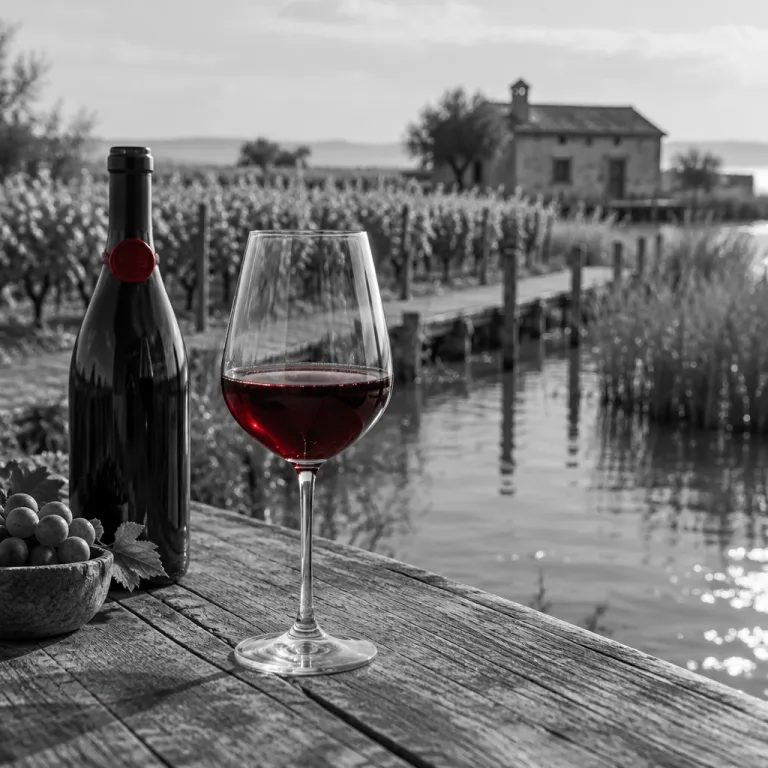
Arriving at Venissa estate: a slow journey across the Venetian Lagoon
The detour from Venice to the Venissa estate begins on the water. You board a vaporetto near San Marco, leave the crowds of Piazza San Marco behind, and watch the palaces dissolve into working canals and open lagoon light. The boat glides past the church towers of Santa Maria and other islands before Mazzorbo island appears, low and green against the horizon.
This is not a transfer; it is the first chapter of the Venissa experience. The Venetian Lagoon opens wide, with fishing nets, wooden briccole and distant campanili framing your approach to the island and its walled vineyard. As you step off at Mazzorbo, the air shifts from stone and diesel to salt, grass and the faint scent of vines.
The path from the vaporetto stop to Venissa runs beside vegetable gardens and the old church of Santa Maria Assunta. You see the resort walls ahead, enclosing the vineyard like a cloister, and the bell tower rising over the vines and resort rooms. Already, this island feels far from central Venice, yet the skyline of San Marco still shimmers across the water.
Most visitors arrive for a day, but the real depth comes with a stay. When you sleep on Mazzorbo island, you wake to the sound of boats instead of rolling suitcases and to light moving slowly across the walled vineyard. The resort is small, the vineyard compact, and the Venetian Lagoon feels like a protective moat around this pocket of viticultural calm.
From here, you can walk over the wooden bridge to Burano, then retreat again to the quiet of Venissa. The contrast between the colourful houses of Burano and the gold toned vines inside the walls underlines why this is an anti mass tourism wine resort. You are not shuttled between tastings; you are folded into the daily rhythm of an island vineyard and the slower pace of lagoon life.
The Dorona grape and the golden wines of native Venice
At the heart of Venissa lies a single, improbable story. The Dorona grape, sometimes called the golden grape of native Venice, almost vanished when repeated lagoon floods and changing tastes pushed it out of local vineyards. Its survival hinged on a few neglected vines and the determination of the Bisol family to read the landscape differently.
Visitors often arrive with practical questions about the estate, the native grape and how to experience the property, and the factual answers matter for serious wine travelers. Clear explanations about the historic Venetian white variety, the Mazzorbo location in the northern lagoon and the availability of tours and tastings anchor the more romantic elements of the Dorona Venezia narrative.
Gianluca Bisol, working with local agronomists, traced surviving Dorona vines in the early 2000s and began the vineyard revival that now defines Venissa wine. The Dorona variety thrives in the saline soils of the island, producing thick skinned grapes that handle acqua alta and intense lagoon light. In the glass, Venissa Bianco is structured and savoury, with a saline edge that speaks directly of the Venetian Lagoon rather than any inland appellation.
The estate produces only around 3,500 bottles of Venissa Bianco each year, and the gold leaf labels echo the golden grape colour in a way that could feel gimmicky elsewhere. Here, the gold detail simply mirrors the burnished hue of the wines and the late afternoon light on the lagoon. For travelers used to large scale cellars, this tiny walled vineyard feels almost monastic in its focus on a single grape variety.
If you have explored other characterful wine experiences, such as the vermouth traditions of Mendoza described in this guide to wild vermouth and vineyard culture, Venissa will feel like a European counterpoint. The Dorona grape offers a different expression of place, one that is maritime, saline and shaped by tides rather than mountains. It is a reminder that native Venice once drank wines grown within sight of San Marco, and that this habit is being quietly revived on Mazzorbo island.
Staying among the vines: resort rooms, osterie and lagoon cuisine
Venissa is first a vineyard, then a wine resort, and only finally a place to sleep. The resort rooms sit within historic buildings that open directly onto the walled vineyard, so you step from bed to rows of Dorona vines in a few strides. This proximity to the vines shapes every part of a stay, from breakfast light to late night walks under the bell tower of Santa Maria Assunta.
The culinary offer is split between the fine dining ristorante Venissa and the more relaxed Osteria Contemporanea, both supplied by the estate gardens and lagoon fishermen. At the ristorante Venissa, tasting menus lean into the saline character of the Venetian Lagoon, pairing lagoon seafood, wild herbs and vegetables with Venissa Bianco and other wines from the Bisol family. In the osteria, plates are simpler, portions more generous, and the focus is on convivial wine experiences that stretch into the evening.
Lagoon cuisine here is not a backdrop; it is the second protagonist after the Dorona grape. Dishes might feature razor clams, soft shell crabs or seasonal vegetables grown a few metres from your table, alongside signatures such as risotto with lagoon herbs, all designed to echo the structure and minerality of Venissa wine. The result is a rare alignment between vineyard, kitchen and glass that serious wine travelers will recognise immediately.
For those tracing broader wine journeys, Venissa sits comfortably alongside other destination estates featured in this overview of festive vineyard travel from Santa Fe to Santa Margherita. Where those routes span continents, this island stay compresses the experience into a few hectares of vines and water. You trade road trips for boat rides and long cellar corridors for a single, carefully tended vineyard.
Evenings often end with a final glass under the pergola, the lights of Venice flickering across the lagoon. The resort team is present but discreet, leaving space for guests to absorb the quiet and the scent of the vines. It is hospitality that trusts the place, the wines and the Dorona Venezia story to do most of the talking.
Inside the walled vineyard: guided wine experiences and the Bisol story
Walking into the walled vineyard at Venissa feels like stepping into a living archive. The walls shelter the Dorona vines from lagoon winds while trapping heat, creating a microclimate that differs subtly from the rest of Mazzorbo island. Guides lead small groups between rows, explaining how saline soils, high water tables and traditional viticulture shape the Dorona grape.
The Bisol family, long associated with sparkling wines from the Veneto, approached this project with a different mindset. Here, Gianluca Bisol and his collaborators chose hand harvesting, low yields and concrete tanks to preserve texture and the particular character of Dorona Venezia. The result is a set of wines that feel closer to lagoon grown field blends of the past than to polished international varieties.
Structured wine experiences at the estate usually combine a vineyard walk, a visit to the tiny cellar and a tasting of Venissa Bianco alongside other wines linked to the Bisol name. You might taste a younger Venissa wine next to an older vintage, noting how the golden grape gains savoury depth and gentle oxidation with time. The guides are refreshingly direct about production limits, explaining that only a few thousand bottles leave the island each year.
For independent travelers, this scale matters because it keeps the focus on place rather than on visitor throughput. Groups are small, the pace is unhurried, and there is time to ask detailed questions about rootstocks, pruning choices or how the vines cope with acqua alta. Serious wine students will appreciate the chance to connect viticultural decisions directly to what is in the glass.
If you are mapping a broader itinerary of character driven vineyards, consider pairing Venissa with other in depth wine journeys such as this analysis of how Sula reshaped Nashik into a major wine destination. Where that story is about regional transformation, the Venissa estate narrative is about micro scale revival. Both underline how focused vision, patient work and respect for local conditions can redefine what wine travel looks like.
Planning your detour: when to go, how long to stay, what it signals for wine travel
Planning a visit to Venissa requires more intention than booking a standard Venice stay. With only a handful of resort rooms, the wine resort often fills well in advance, especially when food focused travelers target the ristorante Venissa and Osteria Contemporanea. Serious wine travelers should secure both their room and key wine experiences before fixing flights.
The best seasons for a Venissa estate trip are those when the lagoon light is soft and the vines are either in leaf or turning gold. Spring brings fresh greens to the gardens and a sense of renewal in the vineyard, while late summer and early autumn show the Dorona grape at full ripeness. Winter has its own stark beauty, but some travelers may find the combination of shorter days and cooler lagoon breezes less conducive to long vineyard walks.
Most guests stay one or two nights, though a third night allows deeper immersion in the rhythms of Mazzorbo island. With extra time, you can explore Burano, visit lesser known churches such as Santa Maria Assunta, and still return for unhurried tastings of Venissa Bianco and other wines. The key is to treat this as a retreat from Venice rather than a quick excursion, even though San Marco lies only a boat ride away.
From a broader perspective, Venissa points toward a future of wine travel built around intimacy, specificity and unreplicable context. Here, a single walled vineyard, one native Venice grape and a small team create something that cannot be scaled without losing its essence. For travelers weary of mass tourism, this island resort offers a template for how wine, place and hospitality can align without spectacle.
As you leave by vaporetto, the golden tones of the vines and the memory of Dorona Venezia in the glass linger longer than any postcard view of Piazza San Marco. You carry with you not just bottles of Venissa wine, but a clearer sense of how fragile and resilient viticultural heritage can be. That alone justifies the detour across the Venetian Lagoon to this quiet corner of Mazzorbo island.
FAQ
Where exactly is Venissa and how do I reach it from Venice ?
Venissa sits on Mazzorbo island in the northern Venetian Lagoon, linked by a footbridge to Burano. From central Venice, you take ACTV vaporetto line 12 toward Burano and step off at the Mazzorbo stop, then walk a few minutes along the path beside the church of Santa Maria Assunta to reach the estate.
What makes the Dorona grape and Venissa wine so distinctive ?
Dorona is a historic white grape native to Venice that thrives in saline, lagoon influenced soils. At Venissa, this Dorona grape yields Venissa Bianco, a structured, golden hued wine with savoury, mineral notes that reflect the walled vineyard and its proximity to the water.
Can I visit Venissa just for a tasting without staying overnight ?
Yes, the estate offers guided vineyard tours and tastings for day visitors, subject to reservation. Many travelers combine a visit to the walled vineyard and a tasting of Venissa wine with lunch or dinner at the Osteria Contemporanea or ristorante Venissa before returning to Venice by boat.
How many rooms does the Venissa wine resort have and how far ahead should I book ?
The wine resort has only a small number of resort rooms, which keeps the atmosphere quiet and personal. Because of this limited capacity and the popularity of the restaurant, it is wise to book several months ahead, especially if you plan to visit during peak lagoon seasons.
Is Venissa suitable for travelers new to wine, or only for experts ?
Venissa works well for both curious newcomers and experienced wine travelers because the focus is on place and story rather than technical jargon. Guides explain the Dorona Venezia narrative in clear terms, and tastings are structured to highlight how the vineyard, lagoon and grape variety shape the wines in the glass.
Sources
Euronews – feature on must visit wine destinations and the role of Venissa in reviving Dorona in the Venetian Lagoon.
Wine Travel Awards – recognition of Venissa as a notable wine travel destination for its walled vineyard and native grape focus.
Retrogusti – reporting on Venissa wine production volumes and the small scale nature of Dorona bottlings.