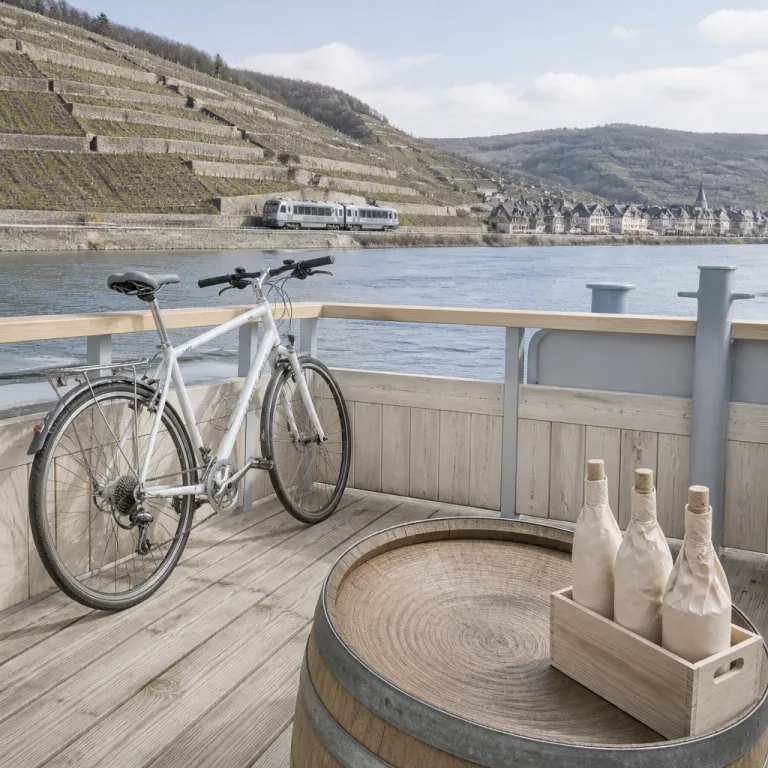
Why a wine tour without car, train and cycling belongs on your family shortlist
Planning a wine tour without car, train and cycling might sound niche, yet it solves three modern travel headaches at once. You remove designated driver stress, cut the carbon footprint of your wine country escape, and move at a pace that actually matches the rhythm of vineyards. For a premium family used to driving between Napa Valley wineries or Sonoma County tasting rooms, going car free in Europe feels both liberating and surprisingly practical.
Across Alsace, the Douro and the Mosel, regional train networks, riverside bike tours and ferries now link vineyards, wineries and villages with a reliability that rivals any valley wine shuttle. Local tour operators have built wine tours that work year round, with clear options for a guided group tour, a private guide or a self guided day using public transport. The result is a car free wine itinerary that still delivers serious wine tasting, atmospheric dinners and enough flexibility to keep children engaged.
Travelers, winemakers and local tour operators in these regions share a common goal; they want wine tours that support local economies while keeping landscapes intact. As one regional initiative puts it, "Use trains, bikes, and ferries to navigate between wineries." That simple sentence captures the essence of a modern wine tour without car, where the train replaces the car, the bike replaces the shuttle, and the river ferry becomes your moving tasting room between vineyards.
Alsace by TER train and vine trail bike: Colmar, Ribeauvillé and family friendly tastings
The Alsace Wine Route runs for roughly 170 km between Marlenheim and Thann, and a wine tour without car here starts on the TER train line between Strasbourg and Colmar. Trains stop near key vineyard villages, so you can plan a day that combines short rail hops with cycling sections on the dedicated vine trail. For a family, this structure keeps transfers short, builds in movement for children and still leaves ample time for wine tastings in village tasting rooms.
Base yourself in Colmar or Strasbourg, both compact enough to explore without car and well supplied with regional trains, buses and bike rental shops. From Colmar, you can ride the vine trail north towards Ribeauvillé and Riquewihr, passing vineyards almost the entire way, then return by train if younger legs tire. Many wineries along this corridor now advertise that they welcome visitors arriving by bike tours or on foot, and several offer relaxed family friendly tasting flights alongside juice or snacks for children.
Think of the TER as your Alsace wine train; it is not a themed tourist train, but a reliable backbone for a car free itinerary that still feels indulgent. You can schedule a morning wine tour in Eguisheim, ride the vine trail for an hour, then take an afternoon train back for a leisurely dinner in Colmar. To time this against crowds and heat, study seasonal advice on navigating peak and off peak vineyard travel, then book dinner in advance at village restaurants that understand both wine country pacing and family needs.
Sample 2 day Alsace family itinerary without car: Day 1: Morning TER from Strasbourg to Colmar (about 30 minutes, tickets often from €10–€15 per adult each way), drop bags at a central hotel, then cycle the vine trail to Eguisheim for a late morning tasting and village walk. After lunch on the square, ride back via side roads, return bikes and enjoy an early dinner in Colmar. Day 2: Take a short train to Ribeauvillé via Sélestat, rent bikes near the station (for example, Vélodocteurs, +33 (0)3 89 41 23 45, [email protected]), follow signposted paths towards Riquewihr with one pre booked tasting at a family friendly cellar, then catch an afternoon train back to Strasbourg.
Douro Valley by historic train and river boat: quintas, terraces and slow travel
In Portugal’s Douro Valley, a wine tour without car revolves around the Linha do Douro railway and the river itself. The train from Porto to Régua or Pinhão takes around 2.5 hours, following the river past terraced vineyards that define this UNESCO listed wine country landscape. For many travelers, that single train ride feels more immersive than an entire day of driving between wineries in a more familiar valley.
Once in Régua or Pinhão, you can shift from train to river boat, using scheduled cruises or smaller transfers to reach working quintas for wine tasting and lunch. Several estates now coordinate with local tour operators to offer wine tours that combine a short river segment, a guided vineyard walk and a cellar tasting, all without car logistics. Families often appreciate that children can watch boats, trains and vineyard work while adults focus on the glass, rather than on navigating narrow valley roads.
The Douro’s rhythm suits travelers who like one substantial activity per day, rather than a checklist of wineries. You might take the morning train up the valley, enjoy a private tour and tasting at a single quinta such as Quinta do Seixo or Quinta da Pacheca, then return by late afternoon river cruise for dinner in Porto. For readers curious about how other emerging regions handle infrastructure, the profile of Moldova’s underground cellar on large scale wine tourism offers an instructive contrast to the Douro’s quieter, terrace based model.
Sample 1–2 day Douro itinerary without car: Day 1: Depart Porto on a mid morning Linha do Douro train to Pinhão (standard second class fares commonly start around €15–€20 per adult each way), walk from the station to the riverfront and board a pre booked boat transfer to a nearby quinta for a vineyard tour, tasting and lunch. Return by late afternoon cruise and take the evening train back to Porto. Day 2 (optional): Ride an earlier train to Régua, visit the local Douro museum, then join a small group river cruise with an operator such as Douro Azul (+351 223 402 500, [email protected]) that includes a second estate visit before returning by rail.
Mosel by regional train, riverside cycling and ferries between banks
Germany’s Mosel valley is arguably the most complete example of a wine tour without car, train and cycling working together seamlessly. Regional trains link Koblenz and Trier with frequent stops at vineyard villages such as Cochem, Bullay and Traben Trarbach, all within walking distance of riverside promenades. From these stations, you can rent bikes, board ferries or simply stroll to tasting rooms that specialise in valley wine styles from slate steep slopes.
The Mosel’s dedicated riverside cycle path runs almost continuously between key villages, making it ideal for relaxed family bike tours with frequent pauses for playgrounds and cafés. Ferries shuttle pedestrians and cyclists between banks, so you can plan a loop that visits wineries on one side in the morning, crosses the river for lunch, then returns by a different route in the afternoon. Many winery owners here are used to guests arriving by train or ferry and will happily suggest a return schedule that keeps your day car free and unhurried.
For parents balancing wine tasting with children’s energy levels, the Mosel offers a reassuring mix of short distances and varied transport. You might schedule a morning visit to a winery near Cochem, enjoy a picnic by the river, then take a ferry across for an easy ride back to your base. For more ideas on structuring a trip where the kids play while you taste, the guide to traveling with children in wine country aligns closely with Mosel style logistics.
Sample 2 day Mosel itinerary without car: Day 1: Travel by regional train from Koblenz to Cochem (local RB or RE services typically run at least once per hour during the day according to Deutsche Bahn regional timetables), walk to your guesthouse, then rent bikes for an afternoon ride along the riverside path with one pre arranged tasting at a nearby estate. Day 2: Take a short morning train to Bullay, cross the river by ferry, cycle to Traben Trarbach with a lunch stop and playground break, then return by train in the late afternoon; for bike hire, outlets such as Mosel Bike (+49 (0)2671 12345, [email protected]) can provide child seats and helmets.
Practical logistics: combining train tickets, bike rentals and guided tours
Executing a wine tour without car across Alsace, the Douro or the Mosel starts with transport tickets, not winery reservations. Book train segments early for popular weekends, especially if your family needs seats together and space for luggage or folding bikes. In all three regions, regional rail passes can reduce the cost of a multi day wine tour and simplify last minute changes when weather or children’s moods shift.
Bike rentals are widely available near major stations and in larger villages, but capacity can tighten during harvest and school holidays. Reserve child seats, trailers or e bikes in advance, and confirm whether your rental shop provides helmets, locks and basic repair kits. When planning a wine tour without car, build in generous buffers between train arrivals, bike pickups and winery appointments, so a delayed connection does not cascade into a lost tasting.
Guided tours can be a smart overlay on a largely independent itinerary, especially for one key day in each region. In Alsace, a small group tour might handle a cluster of vineyards that are harder to reach by train and bike alone, while in the Douro a private river based tour can align boat timings with a specific winery’s cellar schedule. In the Mosel, consider a guided cycling day that strings together several tasting rooms and ferry crossings, leaving you free to focus on the valley rather than on navigation.
For up to date timetables and practical details, check the official TER Grand Est pages for Alsace regional trains, the Linha do Douro schedules published by Comboios de Portugal, and Deutsche Bahn’s regional listings for Mosel services. Local tourism offices in Colmar, Porto and Cochem maintain current lists of bike rental shops, family friendly wineries and accredited tour operators who specialise in car free wine travel.
Budget, sustainability and why car free wine country often feels more luxurious
Many travelers assume that a wine tour without car is a compromise, yet the numbers and the experience often tell a different story. Remove rental fees, fuel, tolls and parking from a multi day itinerary, and the savings can comfortably fund a private guide for one day or an upgraded dinner in each region. Because trains, ferries and bike tours run year round in Alsace, the Douro and the Mosel, you can also shift your trip into shoulder seasons when accommodation and winery tastings cost less.
From a sustainability perspective, these car free structures are not marketing gloss; they are central to how regions manage visitor impact. Rail lines and river boats concentrate movement along existing corridors, while cycling paths keep most casual traffic off narrow vineyard lanes used by growers. For families raising children who are conscious of climate issues, being able to say that your wine tour without car relied on trains and bikes rather than on a rental car can be part of the trip’s story.
There is also a quieter form of luxury in not driving through wine country. You can taste more broadly without worrying about alcohol limits, watch the landscape rather than the road, and let children treat trains and ferries as part of the adventure. In practice, that often feels closer to pure luxury than any chauffeured transfer, because the pace of your wine tour aligns with the pace of the vineyards themselves.
Key figures for car free wine touring in Alsace, the Douro and the Mosel
- The Alsace Wine Route extends for about 170 km between Marlenheim and Thann, which means a fit cyclist can comfortably divide it into three to five relaxed days of riding with daily winery visits (source: official Alsace Wine Route information).
- The train journey from Porto to Régua in the Douro Valley takes roughly 2.5 hours, long enough to feel like a scenic excursion yet short enough to work as a day trip for families based in the city (source: regional Douro travel guides and Comboios de Portugal timetables).
- Regional trains along the Mosel between Koblenz and Trier typically run at least once per hour during the day, giving car free travelers flexibility to adjust winery appointments or bike distances without major penalties (source: Deutsche Bahn regional timetables).
- Across these three regions, bike rental shops commonly offer child seats or trailers, and advance reservations are strongly recommended during harvest months when cycling tourism peaks (source: local tourism boards and cycling associations).
FAQ about planning a car free wine tour by train, bike and ferry
How do I travel between wineries without a car ?
Use trains, bikes, and ferries to navigate between wineries. In Alsace, TER trains link Strasbourg and Colmar with nearby vineyard villages, while the Douro and Mosel combine regional rail with river boats and local buses. Short bike segments or village walks usually connect stations and docks to individual wineries.
Are bike rentals available in these regions ?
Yes, bike rentals are widely available in Alsace, the Douro and the Mosel, especially near major train stations and in key wine villages. Many shops offer e bikes, child seats and trailers, which makes a wine tour without car more accessible for families. Booking in advance is wise during harvest and school holidays.
Do wineries accommodate visitors arriving without car ?
Many wineries in these regions are set up for guests who arrive by train, bike or ferry, and some even highlight car free access on their websites. You will often find clear walking directions from stations or docks, as well as flexible tasting slots that match public transport timetables. It still pays to reserve tastings ahead, especially for weekends.
Is a car free wine tour suitable for families with children ?
Yes, a wine tour without car can work very well for families, because trains, boats and bikes break the day into varied segments that keep children engaged. Short rides between villages, riverside playgrounds and vineyard walks can be woven around one or two tastings. Choosing family friendly wineries and avoiding the hottest weeks of summer will improve everyone’s experience.
How far in advance should I book transport and tastings ?
For peak weekends and harvest periods, reserve key train segments, bike rentals and winery tastings several weeks ahead. Outside those windows, a few days’ notice is often enough, though popular estates may still require earlier booking. Always check seasonal schedules for trains and ferries, as frequencies can shift between high and low seasons.