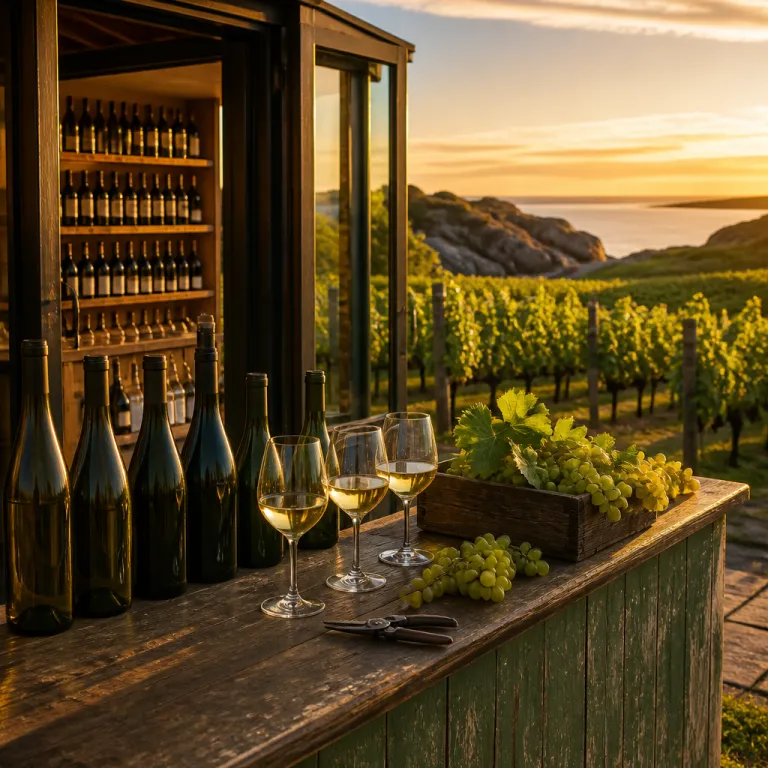
Why Sweden is now a serious wine vineyard visit destination
Sweden has shifted from curiosity to credible wine country for focused travelers. The combination of cool-climate winemaking, a new legal framework for limited direct sales, and a tight link to Nordic gastronomy now gives visitors a coherent reason to plan vineyard tours here. For a solo explorer used to France or California, the contrast between Swedish wine culture and classic regions is precisely what makes this country compelling.
Commercial winemaking in Sweden only became possible after European and national deregulation allowed local producers to register and produce wines professionally. Today estimates from industry bodies suggest around fifty to sixty professional Swedish wine producers operate among roughly one hundred vineyards, with most of them based in Skåne, the southern region that feels like the country’s natural wine belt. This Skåne region, together with islands such as Gotland and Öland, now anchors any serious Swedish wine itinerary.
Recent Swedish government reforms that opened the door to tightly regulated farm-gate sales have transformed the economics of each small winery and the experience for visitors. Under the current pilot scheme, introduced in 2024 through a specific national law on farm sales rather than broad deregulation, producers can sell a limited number of bottles directly in connection with a guided tour tasting or structured wine tasting. Early industry commentary suggests that a significant share of Swedish wine now moves through these direct channels. For you as a traveler, that means many of the most interesting bottles never reach national retail shelves and are best found at the wine cellar where they were produced.
Sweden’s cool climate and long summer daylight shape a very particular style wine profile. The leading Solaris grape, a fungus-resistant PIWI variety, ripens reliably even this far north and allows growers to produce wines with high acidity and clean fruit. When you taste Swedish wine at the source, you feel that Nordic light in the glass rather than the sun-baked richness of southern Europe.
Skåne, Bjäre peninsula and the rise of Solaris driven vineyard tours
Skåne is the natural starting point for any Sweden wine vineyard visit destination because it concentrates the most ambitious estates. The region sits just across the Öresund from Copenhagen, which makes it easy for international visitors to land, rent a car, and be among vines within an hour. Rolling fields, low coastal hills and a maritime breeze create a surprisingly gentle setting for vineyards in a country better known for forests and lakes.
On the Bjäre peninsula, vineyards such as Kullabergs vingård and Ästad vingård show how Swedish wine has moved beyond experiment into confident identity. Kullabergs vingård, often written as Kullabergs vingard in Swedish and English materials, lies near the Kullaberg nature reserve and uses the Solaris grape alongside other PIWI varieties to produce wines with piercing acidity and a saline edge. Ästad vingård, further south but still within reach for a day tour, integrates its winery, restaurant and spa into a single rural estate that rewards an overnight stay.
These producers in Skåne and on the Bjäre peninsula have embraced vineyard tours as a core part of their business model. You can book a guided tour that walks you through the vines, explains how they produce wines in such a cool region, and ends in a structured tasting experience in the wine cellar. The minimum age for any tour tasting or wine tasting is twenty, which reflects Sweden’s stricter alcohol rules compared with many European countries.
Solaris-driven sparkling wine is one of the most convincing categories to seek out on these vineyard tours. Many estates use the traditional method, the same technique used in Champagne, to produce sparkling wines with fine bubbles and a Nordic citrus profile. When you plan your route through vingård Skåne properties, prioritize those that offer both still white wines and traditional-method sparkling wine, because the contrast in style wine from the same grape is instructive.
Sweden’s emergence fits into a broader story of new wine frontiers that we have followed from Georgia to the Andes, as explored in our coverage of wine travel awards in emerging regions. In Skåne, that frontier feeling is present in every conversation with growers who are still defining what Swedish wine should be. For a traveler who values authenticity over polish, this region offers exactly the right level of experimentation and grounded hospitality.
Kullabergs vingård, Ästad vingård and the people behind the bottles
Names matter when you plan a Sweden wine vineyard visit destination, because the scene is still small enough that each producer has an outsized influence. Kullabergs vingård has become a reference for how to work with the Solaris grape in both still and sparkling forms, and its location near the sea gives visitors a strong sense of place. The estate’s vineyard tours typically include a walk up the slope where the wind exposure and soil change within a few meters, which helps you understand why certain parcels are reserved for sparkling wine.
Ästad vingård, often written as Astad vingard in English language materials, offers a different style of visit that blends gastronomy and wellness with winemaking. Here the winery sits beside a high-level restaurant that leans into local produce, fermented vegetables and precise pairings with Swedish wine. A tasting experience might move from a bright white Solaris to a skin-contact cuvée that nods toward Georgian-style amphora traditions, before finishing with a structured sparkling wine flight.
Personalities also shape the narrative of Swedish wine, and figures such as Jeppe Appelin have become touchpoints for visitors who want to go beyond labels. When a winemaker like Jeppe Appelin walks you through the wine cellar, pulls a sample from tank, and explains why PIWI grapes matter for sustainability, the abstract idea of cool-climate winemaking becomes tangible. That direct contact is one reason the Swedish government’s decision to allow carefully controlled cellar-door sales has had such a strong impact on both rural economies and wine tourism.
Other estates such as Thora vingård, sometimes listed as Thora vingard, show how smaller family-run properties contribute to the diversity of styles. A visit here might focus on a single parcel of vines, a compact winery and a handful of wines that reflect one family’s interpretation of the region. If you are used to the scale of southern France, where our guide to elegant vineyard journeys in Roussillon covers dozens of appellations, the intimacy of these Swedish visits feels almost radical.
Across these properties, the common thread is a willingness to experiment with style wine while staying grounded in the realities of a cool, humid climate. Producers use PIWI varieties such as Solaris to reduce spraying and align with Sweden’s broader sustainability culture, which appeals strongly to environmentally conscious visitors. For a solo traveler, that means every conversation in the vineyard or winery quickly moves from tasting notes to questions of farming, resilience and the future of Nordic agriculture.
How to plan a sweden wine vineyard visit destination itinerary
Planning a Sweden wine vineyard visit destination requires more structure than dropping into tasting rooms in California or Provence. Most Swedish wineries are small, family-run operations that rely on pre-booked visits, and many only open their doors on specific days or during the main summer season. You should book vineyard tours well in advance, especially if you want an in-depth tasting experience rather than a quick pour at the counter.
Start by anchoring your itinerary in Skåne, where you can cluster visits to Kullabergs vingård, Ästad vingård, Thora vingård and other vingård Skåne addresses within a few days. Use Helsingborg, Malmö or even the Copenhagen side of the Öresund as your urban base, then rent a car to reach each winery and vineyard efficiently. Distances are short by American standards, with many estates only 20 to 40 kilometres apart, but public transport to rural properties remains limited.
Because Sweden is a country with strict alcohol regulations, you need to understand the framework before you arrive. Tastings are allowed for visitors aged twenty and above, and the evolving farm-sale rules mean that you can now buy bottles directly from the winery after a tour tasting or wine tasting, subject to volume caps and local permits. Quantities may be limited, so if you plan to bring Swedish wine home, check both Swedish export rules and your own country’s import allowances.
Summer is the most comfortable season for a Sweden wine vineyard visit destination, with long days that stretch well into the evening and vines in full leaf. Shoulder seasons can be rewarding for photography and quiet cellars, but some vineyard tours may not operate daily outside peak months. In all cases, dress in layers, because a walk through a windswept vineyard on the Bjäre peninsula can feel much cooler than the temperature suggests.
To deepen your understanding of how emerging regions evolve, it is worth reading about classic turning points such as the Stags Leap story in Napa, which we explored in detail in our piece on visiting Stags Leap during the judgment day anniversary. Sweden is at a similar inflection point, where a handful of producers and a change in law can redefine the country’s place on the global wine map. Experiencing that shift firsthand, glass in hand, is precisely what makes this destination compelling for serious wine travelers.
What Swedish wine tastes like in the glass
Understanding whether a Sweden wine vineyard visit destination suits your palate means looking closely at what ends up in the glass. Swedish wine is shaped by high latitude, cool summers and long daylight hours, which together produce wines with elevated acidity and moderate alcohol. If you enjoy crisp white wines from northern France or Germany, there is a strong chance you will appreciate the style wine emerging from Skåne and beyond.
The Solaris grape dominates plantings and underpins many of the most successful cuvées, both still and sparkling. As a PIWI variety, Solaris can resist fungal pressure in Sweden’s humid climate, which allows growers to produce wines with fewer treatments and a strong sustainability story. In the glass, well-made Solaris often shows citrus, green apple and sometimes a subtle tropical note, all wrapped in a firm acid spine that pairs well with Nordic seafood.
Producers are also experimenting with skin contact and amphora aging, which brings a Georgian-style influence into this northern context. A skin-fermented Solaris or blend might show amber hues, tea-like tannins and a more textural mouthfeel, which can surprise visitors expecting only classic white profiles. Sparkling wine made by the traditional method is another strength, with several estates on the Bjäre peninsula and across vingård Skåne producing bottles that stand up well in blind tastings.
Red wines remain a smaller part of the picture, though some wineries are trialling Pinot Noir and other cool-climate varieties in sheltered sites. For now, the most reliable pleasure for visitors comes from white and sparkling wines, where the combination of acidity, precision and low alcohol suits long summer evenings. When you taste across several wineries in a single day, you start to see how each vineyard and wine cellar interprets the same climate differently.
As one Swedish producer explained when asked about the shift to fungus-resistant grapes, "What are PIWI grapes? Fungus-resistant grape varieties suitable for cool climates." That simple statement captures why this country has been able to build a viable wine industry in a place once considered too cold for viticulture. For travelers, it also means that every tour tasting is a lesson in how innovation and tradition can coexist in a glass of Swedish wine.
FAQ
Is Sweden really worth visiting for wine travel compared with classic regions ?
Sweden is not a replacement for France or Italy, but it offers a distinct Sweden wine vineyard visit destination experience built around cool-climate white and sparkling wines. The scale is intimate, with on the order of fifty to sixty professional producers and roughly one hundred vineyards, which means you can meet winemakers directly and see how they produce wines in challenging conditions. If you value authenticity, sustainability and emerging regions, Sweden deserves a place on your travel list.
What are PIWI grapes and why are they important in Sweden ?
PIWI grapes are fungus-resistant varieties bred to thrive in humid, cool climates where traditional vinifera struggles. In Sweden, PIWI types such as the Solaris grape allow growers to reduce spraying and still produce wines with reliable ripeness and clean fruit. This aligns with the country’s sustainability goals and makes vineyard tours here especially interesting for environmentally minded visitors.
When did Sweden legalize cellar door wine sales and what changed for visitors ?
Sweden introduced a pilot framework for farm-based cellar-door wine sales in 2024 under a specific national law, rather than through broad deregulation. Since then, participating wineries have been able to sell bottles directly to visitors during a tour tasting or wine tasting, within strict limits on volume and eligibility. For travelers, this means you can now buy limited-production Swedish wine straight from the wine cellar shelves after your visit, instead of relying only on the state retail monopoly.
Which regions should I prioritize for a first Swedish wine trip ?
Skåne is the essential starting point for any Sweden wine vineyard visit destination because it concentrates leading estates such as Kullabergs vingård, Ästad vingård and Thora vingård. The Bjäre peninsula within Skåne offers a particularly scenic mix of coastal landscapes and ambitious wineries working with Solaris and other PIWI grapes. Once you have explored vingård Skåne properties, you can extend your itinerary to islands such as Gotland or Öland for additional styles.
How far in advance should I book vineyard tours in Sweden ?
Because most Swedish wineries are small and operate with limited staff, you should book vineyard tours at least several weeks ahead for peak summer dates. Many estates only accept visitors with reservations, especially for in-depth tasting experience formats that include walks through the vineyard and guided flights in the wine cellar. Last-minute drop-ins are rare, so planning is essential if you want to see more than one winery per day.